Showing posts with label Learning. Show all posts
Showing posts with label Learning. Show all posts
Wednesday, January 14, 2015
Sensory Exploration Begins at Birth, Shaping Our Learning and Memory

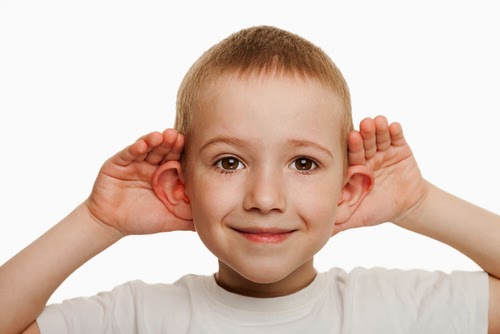
As a baby’s senses become heightened with age, that contented, happy nature may change. He or she may become newly annoyed by a wet diaper or reject the texture of a new food. It may be confusing or annoying as a parent, but these changes are signs that your child is beginning to make more sense of the world.
Children and adults alike learn and make memories through their senses, which makes encouraging sensory exploration at a young age important.
Learning
Have you ever had someone try to teach you a concept without seeing or experiencing it for yourself? Learning through sight, sound, smell, taste and touch is much easier than just having the concept described to you.For example, picture trying to explain the word "melt" to a child. You would quickly find it’s much easier to get your point across if you have the child hold an ice cube and watch as it slowly shrinks and drips.
In a more drastic example, children are sure to immediately learn the word "hot" if they try to eat a steaming bowl of soup. By facilitating safe sensory exploration, you give your child the chance to investigate objects and materials and learn how the world works.
Memory
Have you ever smelled a particular perfume or tasted a certain food and been transported back in time to a memory from your youth? Sensory experiences and memories are closely related. Children are most likely to build memories based on sensory exploration when they're young. Having a good memory is a skill that will help your child for a lifetime, whether in school or while completing day to day activities.Image via Shutterstock.com
Tuesday, August 19, 2014
What Can We Learn from Finland’s Free Play Approach to School and Learning?
As anyone who went to school in the United States can attest to, students don’t receive breaks every hour. To Tim Walker, an American teacher working in Finland, the idea of giving students a 15-minute break every 45 minutes seemed like a waste of time. He decided to get creative with the students’ schedules and teach them for 90 minutes with a 30-minute break at the end.
Just three days into the school year, the teacher received a complaint from one fifth grader who said, “I think I’m going to explode! I’m not used to this schedule.” Once Mr. Walker reversed his schedule alteration, he noticed the students no longer dragged their feet, but instead walked with a spring in their step after returning from the 15-minute break. More importantly, they were extra focused during lessons.

Mr. Walker learned firsthand about Finland’s free play approach to school and learning, which has been the norm in that country since the 1960s. An important part of the break is that students decide how to spend their time. They go out to the playground together or have their break indoors; it doesn’t matter where the students have recess as long as they have free play away from their structured work.
Recess loses the ability to reenergize children if it’s a teacher-directed break time. Recess serves not only as a chance to relax, but as a time of learning important skills, such as cooperation, communication and compromise. While these are skills students need to succeed academically, they are largely learned outside the classroom.
If teachers can stop looking at recess as wasted time, they can stop feeling guilty about cutting instruction short to give their students a break. Perhaps that’s just the thing American schools need to learn from Finland and other countries with high academic success: free play is just as important for learning as listening to a formal lecture in the classroom. And let’s be honest; the teachers benefit from the breaks as well.
To learn more about the connection between frequent breaks, free play and learning essential skills, please contact ListenLoveLearn.
Image via Shutterstock.com
Wednesday, July 30, 2014
How to Play with your 18 month to 3 Year Old to Build Social Skills and Joy
Toys That Help Your 18 Month to 3 Year Old Learn
Toys That Help Your 18 Month to 3 Year Old Learn
This age group can be described two ways- the terrible twos
or the terrific twos, I choose the latter and it is all a matter of knowing how
to help your 18 month old to 3 year old learn!
Mobility
 |
| Wonder Walker |
Starting at 18 months of age you child has become mobile,
they are starting to walk or are already pretty steady on their feet and they are
ready to move! They love to push and pull toys and collect things. While pushing
the Wonder Walker they also have a place to select and collect their toys and
move them to where they want to play. As they become 2 -year olds they like to
ride and pretend. They can be a fire fighter on the Fire Engine or just ride and be anyone they choose on the Driver.
Learning
 |
| Bouncing Sorter |
Your 2 year old is very busy as he/ she starts developing
their hand-eye co-ordination. Playing with a Bouncing Sorter gives your child
the sensory input of touch and strengthens hand eye coordination while they learn about shapes through sorting. They also
continue to love music and playing a toy piano gives them the sensory input of
touch and sound, add words to their songs and language skills become enhanced.
A Deluxe Playcube will keep your 2-3 year old busy and learning all day long,
moving colorful beads, playing with the alphabet blocks or spinning the gears
and there is no clean-up because it is all self-contained.
 |
| Deluxe Playcube |

Language
 |
| Barnyard Activity Boxes |
Pretend Play
 |
| Corrugated Blocks |
“ A 2 year old’s imagination develops naturally, but there
is a lot you can do to spark it,” says Kristi Alexander, a pediatric
psychologist at Alliant International University in San Diego. “ As you expose
your child to new sights, sounds and sensations you open her mind to a bigger
world.” Imagination! It really begins now. Building with big blocks they can they can build a
castle, a city, a house, a road and play alone or with others to create a
make-believe world. Your child’s imagination through play builds a deeper understanding of the world around them. Ding- dong! Let’s play house. It is so much fun to learn all the names of the furniture and
rooms of the house while playing with a mini house with a doorbell that works. Social
skills of greeting and inviting begin here.
 |
| Doorbell House |
Although you could just sit and watch, it is even better if
your join in to your child’s play. By playing with them you are teaching them
so much while you learn about your child.
At each stage of your child’s imaginative development,
listening to him and taking part in his games will help you keep up with what he is thinking. You might revitalize your own imagination in the process.
As always, wishing you lots of fun through play!

Lois Kam Heymann, M.A. CCC-SLP is an expert Speech, Language and Learning specialist with over 30 years of helping kids reach their full potential in communication and learning skills. She is a recognized leader in the treatment of children with language, learning and auditory challenges. She is the Director of Communication Therapy at the Center for Hearing and Communication in New York City. She has been a professor, is a noted author and a frequent guest speaker. Her book The Sound of Hope has been endorsed by Rosie O'Donnell and many others. Her mission is to teach parents about active listening and how to understand the developmental needs of their children. She's now delighted to be bringing parents the quality toys she believes will enhance children's development on her new website-ListenLoveLearn.com
About the Author
Thursday, July 24, 2014
Kids May Say the Darndest Things, But You Can Learn a Lot About Love If You’ll Only Listen

The ListenLoveLearn process is based on a simple fact: listening is the key to success. It’s the primary means by which children learn in the classroom. In such an auditory world, children can quickly fall behind if they have hearing loss or face a challenging auditory process disorder (APD). All you want is to help your child listen better, but have you ever stopped to consider the value of learning from kids?
How long has it been since you really listened? Not to the news, not to the movie you’re watching, not even to your favorite music. When was the last time you really listened to your kids?
They may say the darndest things, but you could learn a lot about love from these tiny people. Consider Greg, age 8. He already knows that “love is the most important thing in the world,” though he does admit “baseball is pretty good, too.” Ava, also age 8, is wiser than her years. She knows that “one of you should know how to write a check because, even if you have tons of love, there is still going to be a lot of bills.” Floyd, age 9, sums up how we all feel: “Love is foolish…but I still might try it sometime.”
Statements like these come straight from the mouths of babes. They prove that children are watching, listening and learning about how adults talk and feel about our spouses. If the world was run by children, love would abound more than any other emotion.
That’s why the ListenLoveLearn process is all about providing a supportive, knowledgeable community to empower parents and children to communicate better. As we all know, half of good communication is good listening. And if you want your child to master the ability to listen at home and in the classroom, you have to be willing to listen back.
If you’re ready to join us on this exciting path of learning to listen – and listening to learn – please contact ListenLoveLearn today.
Image via Shutterstock.com
Subscribe to:
Posts (Atom)